Salary Is Only Part of the Story: The Case for Total Reward Statements

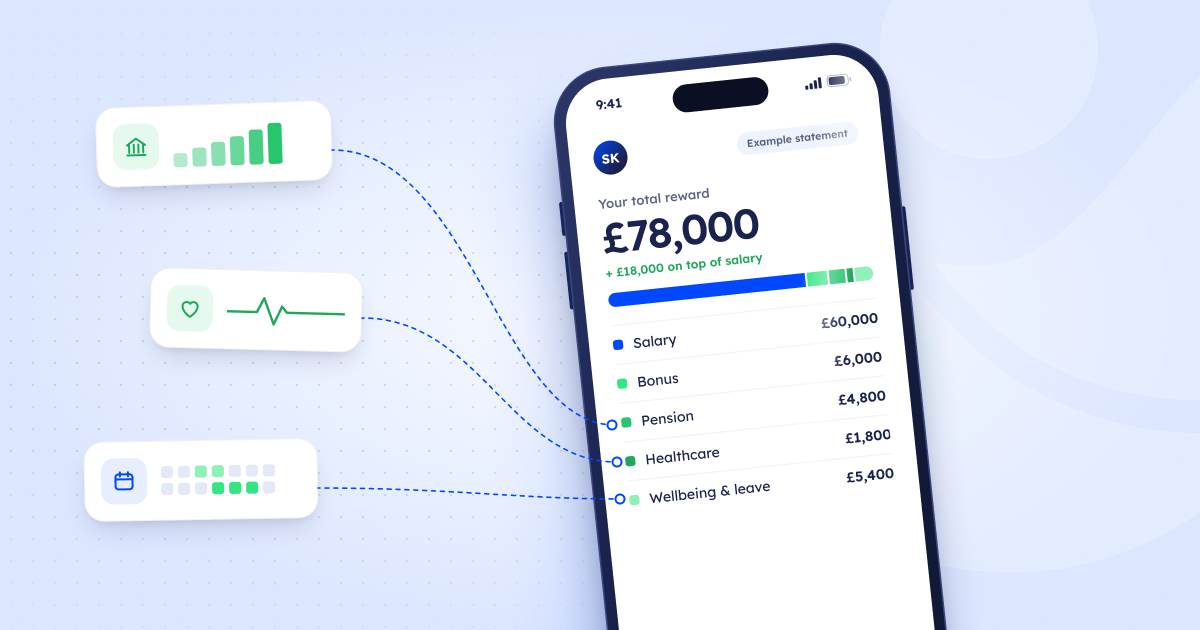
We all know this story. A good employee gets an offer with a 10 to 15% higher salary and takes it, without realising what they’re leaving on the table. The pension and healthcare the company pays for, and the long-term incentive due to vest next spring, rarely make it into the comparison. None of it is easy to see, or to bring up at a moment’s notice.
That’s where a Total Reward Statement helps. It puts each of those numbers right in front of them, whenever they want to look.
It helps the company as a whole too. Finance and the board get one picture of where the reward budget goes, and which parts of it people actually value.
What TRS Does
Rewind a few months, before the offer arrives. The employee opens their statement and sees their package laid out. Salary, bonus, and equity sit next to healthcare, insurance, and retirement savings, and pay, incentives, benefits, and wellbeing each show as a share of the total. Learning budgets, flexible work, parental leave, and values-aligned perks such as climate initiatives or purpose-led recognition are there too.
They open benefits and find cover they’d forgotten they had. They look 12 months ahead and see when their long-term incentive vests. If the company offers flexible benefits, they can try different options during the enrolment window and preview their statement before they choose.
The statement is always on, so none of this waits for a once-a-year document that’s soon out of date.
.png)
Why It Matters
In Drewberry’s 2025 Employee Benefits and Workplace Satisfaction Survey of 1,000 UK working professionals, only 36% said they fully understand their benefits, and just 11% receive regular communication about them. Yet 32% named better benefits as a reason they would leave.
That gap is expensive. It’s how a good employee ends up leaving for a smaller total package, as long as the salary is higher. Gallup estimates that replacing them can cost up to twice their salary. And if people don’t understand the pension or long-term incentives you pay for, that money could be going to waste.
Key Business Benefits
The first benefit is the one in our story. When people can see their whole package, a 10 to 15% salary offer gets measured against everything they would give up.
Drewberry also found that 67% either don’t know about or don’t use extras such as virtual GP access that come with health and life cover. When every reward is listed in one place, people can find what they didn’t know they had and make the most of it.
The second is knowing where the money should go. Employees rate rewards on their statement with a smiley face, and HR sees a satisfaction score for each one. If the learning budget scores well and a wellbeing programme scores low, you can put more into learning next year and stop paying for a benefit people don’t value. Know which rewards matter, then fund them.
.png)
A Strategic Tool in Practice
At one company, the board and CEO asked what it spends on benefits, and nobody could produce the figure. That question is why it moved to uFlexReward. The Executive Report answers it in one view, by country, level, or site, and reward modelling lets HR see a full package for any role before a hire, promotion, or restructure.
Reporting takes less time too. Statements and reports share the same data, so the figures employees see are the figures auditors check. The platform supports Pay Equity, ESG, CSRD, and EU Pay Transparency reporting, and the Executive Report exports to Excel when an auditor asks.
.png)
What Sets It Apart
You keep the HR systems you already have, such as Workday or SAP. uFlexReward sits on top, connects to your HR system, and can go live in about 120 days. It was built and run inside Unilever, across more than 110 countries.
Once it’s live, one change to a reward updates every eligible employee’s statement. Exceptions for individual employees upload in bulk from one Excel file. Each reward is versioned, so you can prepare next year’s while this year’s stays on everyone’s statement.
Customers tell us the statements are simple to use, very easy to implement, and easy to keep up to date.
In One Sentence
The next time a recruiter calls with a 10 to 15% offer, your people can see what they’d be leaving behind.
To see what a statement could show for your people, we’ll run your numbers.


.png)


